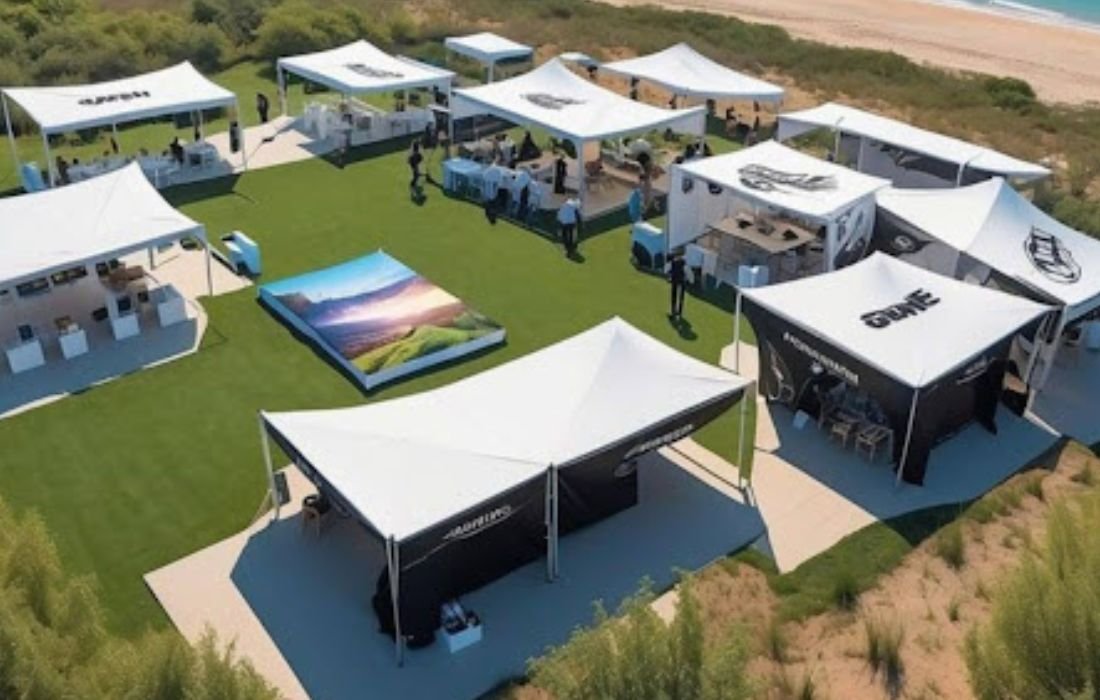
Trade shows and business exhibitions are places where hundreds of brands participate, fighting for the attention of the same customer pool. In this highly competitive environment, being visible and standing out can be difficult. And going invisible at a trade show means a huge loss of both investment and a chance to engage with your customers more deeply. The interactions between your product and people are important for success, but the first impression is nearly always through the visual presentation.
Today, strategic canopy printing is no longer just for featuring logos and company names; it’s an investment in a powerful branding tool that conveys professionalism, brings visitors, and reinforces your brand identity from every angle on the exhibition floor. That’s why many businesses are investing in custom event tents, as they understand how a well-made graphic design can add a memorable and special touch to an event and help them stand out in the crowd. Let’s look at ways in which strategically printed canopies can evoke a sense of curiosity and engagement in visitors by blending creativity with functionality and creating a vibrant and immersive experience.
7 Strategic Canopy Printing Techniques That Maximize Trade Show Visibility
1. Design with Purpose and Industry Relevance
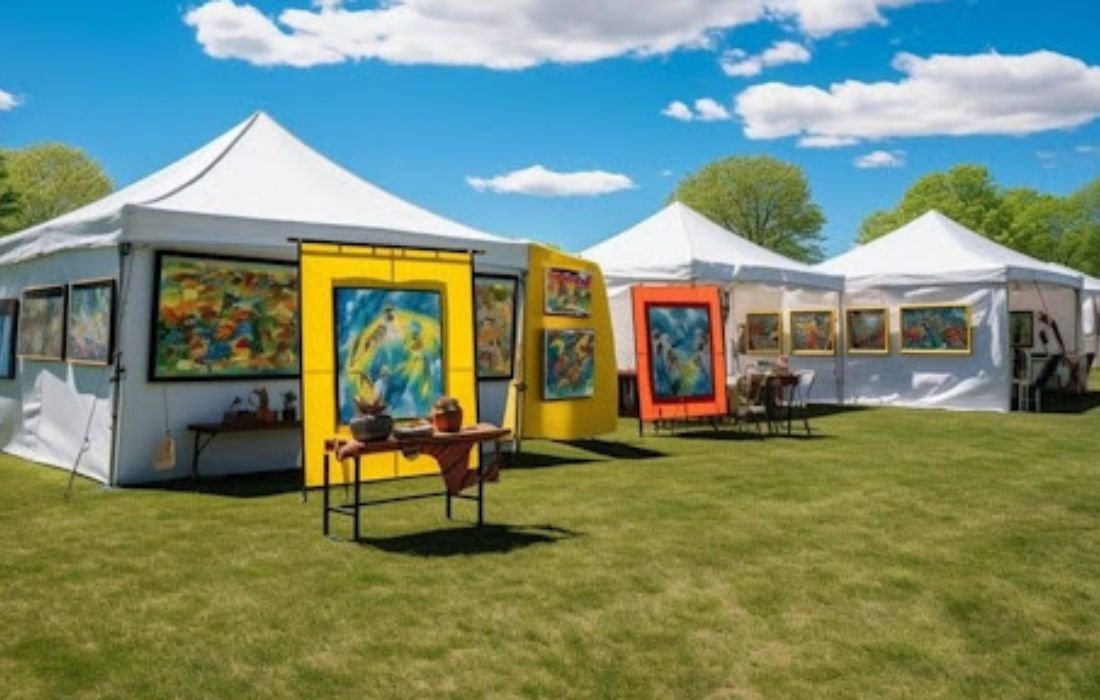
An effective tent for food vendors demonstrates how industry-specific graphics immediately communicate the purpose of an exhibit while attracting the right audience. An eye-catching picture of the food, colorful branding, and well-structured layouts are a natural draw for visitors looking for food or food services. This is true in all industries; the canopy should be designed to visually communicate the products, services, and expertise being promoted.
Graphic design that’s focused on purpose diminishes confusion, enhances brand recognition, and allows visitors to more easily spot relevant exhibitors in crowded exhibition spaces.
2. Prioritize Large, Readable Graphics
Trade show visitors may see exhibits from quite a distance and decide which ones to check out. Large-format graphics, oversized logos, bold typography, and simple messaging make it possible for all the critical branding components to be seen against busy aisles.
Good designs do not try to cram too much information into the canopy; they instead go for a few salient and striking features that convey a message within a few seconds. White layouts make more impact, and make it easier to brand even in the midst of heavy traffic in a hall during an exhibition.
3. Use High-Contrast Color Combinations
In highly visual event environments, color is an important drawcard for capturing people’s attention. High-contrast color schemes make branding more prominent in other exhibits and easier to see when lit differently.
Bold colors should match the organization’s brand and be used consistently across banners, sidewalls, counters, promotional items, and digital displays. Balanced contrast also enhances readability, helping to make logos and messaging more easily recognizable from various perspectives.
4. Extend Branding Across Every Visible Surface
The “modern” canopy printing goes beyond the roof part. Sidewalls, valances, back panels, counters, flags, entrance arches, table covers, and accessory displays all help present brand unity.
By maintaining the same images throughout the exhibit, your branding is recognized no matter how visitors come to your booth, creating an immersive experience for them. However, continuous branding can also help create more exposure from various angles, making the exhibit space more visible.
The overall effect of a unified presentation is to convey professionalism and contribute to the overall visitor experience.
5. Balance Creativity with Simplicity
Certain creative graphics will catch the eye, but excessive complexity will make them less effective at communicating. In successful canopy printing, design is paramount, and the message is immediately clear to visitors without any fuss or flair that would detract from it.
Simpler designs with powerful images, effective use of negative space, and targeted messaging can be more impactful than designs with too many conflicting elements.
Simple and meaningful graphics will also stay in the memory and make it easy to get visitors to find out more by interacting with them first-hand, in addition to the printed material.
6. Incorporate Lighting to Enhance Printed Graphics
No matter how appealing the canopy graphics are, they will still look good with some strategic lighting. The use of integrated LED lights, illuminated banners, and well-positioned spotlights enhances the colors of printed materials and makes them more visible at nighttime outdoor events and indoor exhibitions.
Well-lit hallways and pathways will accentuate the elements of branding, enhance the displays, and attract guests to linger longer inside the exhibit.
7. Invest in Durable Printing for Long-Term Performance
It is common for professional exhibition canopies to be used at many trade shows, festivals, conferences, and promotional events year-round. Repeat transportation, installation in various locations, weather exposure, and long hours in the sun will not diminish graphics through durable printing.
High-resolution printing methods, fade-resistant inks, waterproof materials, and high-quality fabrics ensure brand presentation and lower long-term replacement costs.
With long-lasting graphics, businesses can be sure they look professional at every event and get the best return on their investment every time they use them.
End Point
When it comes to exhibition tents, strategic canopy printing is the key to creating a powerful branding tool to capture attention, enhance recognition, and foster meaningful interaction with visitors. With intentional design, clear graphics, vibrant color, branding, a harmonious creative mixture, lighting, and quality printing, businesses can make their displays “sticky” and memorable in all the hustle and bustle of a trade show. With careful planning, canopies are still an essential part of a brand’s marketing strategy, serving to create a memorable impression at any event.
Also Read : Planned Obsolescence Explained: Examples & Consumer Guide