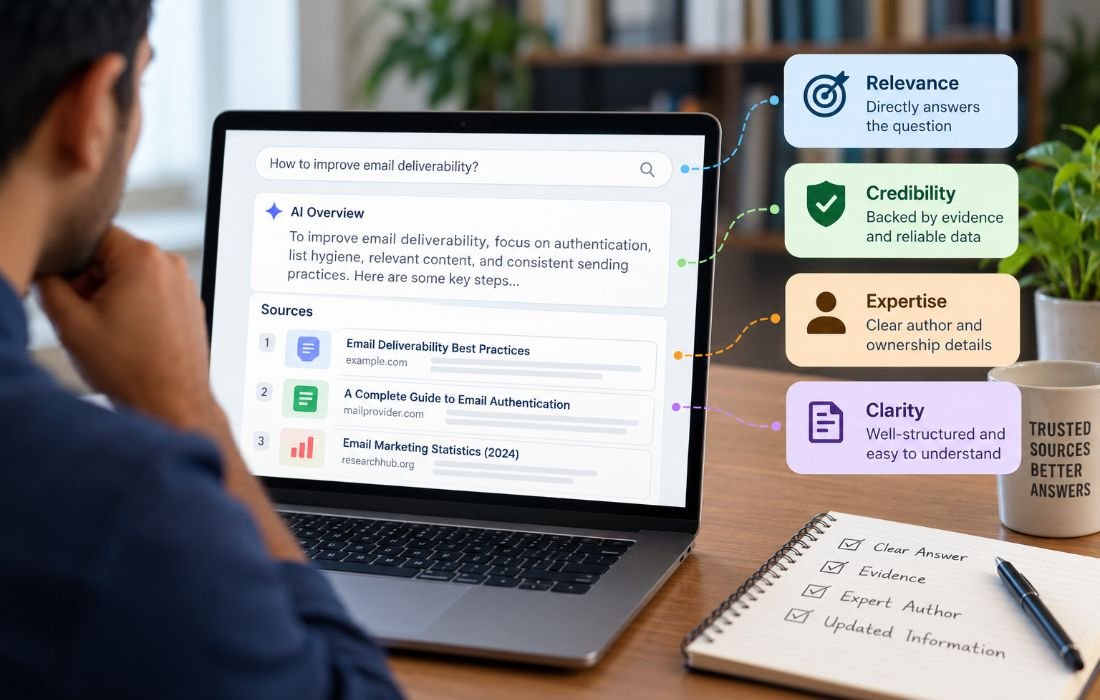
Search results used to give you a list of pages and leave the judgment to you. AI Search changes that experience: a system may pull information from several sources, summarize it, and cite a few pages as support. For businesses and publishers, that raises a practical question: what makes one source more likely to be selected than another? There is no single ranking formula across every AI tool, but the same fundamentals keep showing up: relevance, credibility, clarity, and evidence.
How AI Search selects sources
An AI answer is usually assembled through multiple steps. A system interprets the user’s question, finds potentially useful pages, evaluates the information, and then generates a response. Depending on the product, it may search a web index, use a separate retrieval system, or combine both. The process varies, and a citation is not a promise of endorsement. It indicates that a page was used or judged relevant to the answer.
That distinction matters. A page can rank well in traditional search and still not be cited in a generated answer. Conversely, a focused page that directly resolves a narrow question may be useful even if it is not the best-known site in its field. A closer look at how AI evaluates trusted sources helps explain why visibility depends on more than simply publishing frequently.
Signals that help a page earn trust
Direct relevance to the question
AI systems need material that answers the specific question being asked. A broad page about digital marketing may offer little help to someone asking how to measure email deliverability. Make the subject and intended reader clear, then answer the likely question near the beginning. Useful subheadings help both people and machines identify what each section covers.
Specificity is not the same as stuffing a page with keywords. A detailed explanation, useful examples, and clearly defined terms usually make a stronger resource than repeating the same phrase in every paragraph.
Evidence readers can check
Claims are more persuasive when they are supported. Use primary documents, transparent methodology, named experts, or clearly attributed data where appropriate. Explain what a statistic measures and when it was collected. If an article offers an estimate or opinion, label it as such rather than presenting it as settled fact.
Accuracy also depends on upkeep. Review pages that refer to changing software, regulations, prices, or market conditions. Correct outdated details and make meaningful updates visible to readers. A recent date alone does not make a page reliable; the content needs to reflect the update.
Clear ownership and expertise
Readers should be able to tell who created a page and why they are qualified to discuss its subject. Add an author byline and a short, relevant description of the author’s experience. For company content, explain the organization’s role and separate product claims from independent guidance. Clear accountability helps people judge the material instead of asking them to trust an anonymous page.
Consistent information across the web
When an organization’s name, services, and expertise are described consistently across its own site and reputable third-party sources, it is easier to understand what the organization does. Consistency does not mean copying the same marketing language everywhere. It means keeping basic facts accurate and avoiding contradictory claims.
Make useful information easy to extract
Good writing structure can improve the chances that an answer system correctly understands a page. Put the main point up front, use descriptive headings, and keep each section focused on one idea. Define acronyms on first use. Use tables or lists when they make comparisons easier to follow, not just to decorate the page.
Technical access matters too. Important content should be available as readable text, not hidden entirely in an image or an interactive element that crawlers cannot interpret. Keep internal page organization sensible and avoid making visitors fight through pop-ups to reach the answer. These steps help human readers first; they can also make a page easier for automated systems to process.
A practical workflow for marketers
Start by listing the real questions customers ask during research, sales conversations, and support requests. Choose one question per page or section, then check whether the existing answer is complete, accurate, and easy to scan. A useful review might include:
- Intent: Does the opening answer the question the page promises to address?
- Support: Can readers verify important claims and understand their context?
- Expertise: Is the author or organization’s relevant experience clear?
- Maintenance: Are changing details reviewed on a sensible schedule?
- Usability: Can readers find the answer on a phone without unnecessary friction?
Then measure performance with care. Track referral visits from AI platforms where analytics tools identify them, but do not treat citation counts as the only success metric. Brand searches, qualified leads, engagement, and whether content helps customers make informed decisions all matter. Results can differ by platform, query, location, and user history, so avoid drawing sweeping conclusions from a handful of examples.
Where freelance support can help
Building a reliable content program takes more than drafting articles. Teams may need research, editing, technical SEO, design, or subject-matter review. A freelancer can fill a specific gap, but give them a clear brief: intended audience, sources to consult, claims that need review, and the action the page should help a reader take. The AI tools professionals can add to a freelancer stack can support research and production, while people remain responsible for checking facts, judgment, and final quality. Osdire is one place businesses can find independent professionals across areas such as writing, programming, design, and marketing.
Final thoughts
There is no reliable shortcut to being cited in AI Search. Publish material that answers real questions, shows its work, identifies its authors, and stays accurate as circumstances change. Those habits improve the experience for people and make it easier for automated systems to recognize what a page contributes. Treat citations as a possible outcome of useful, trustworthy publishing—not as a trick to engineer.
Also Read : Best Fintech AI Solutions for Modern Finance: AI Tools, Use Cases, and What Actually Works