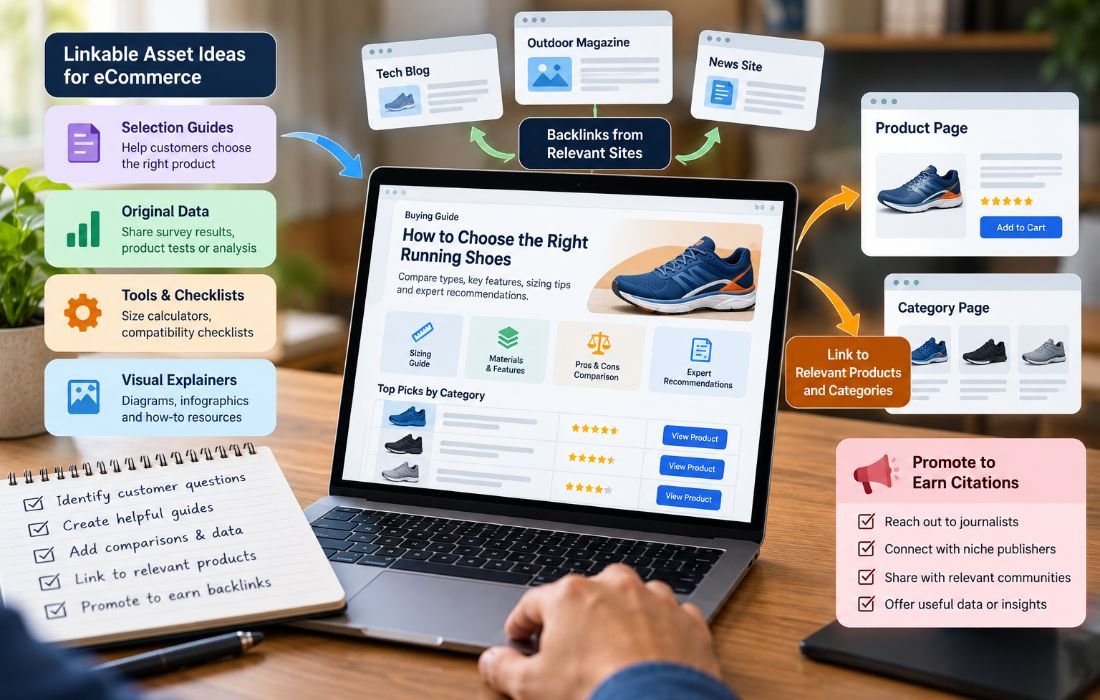
For an online store, earning backlinks is not simply a matter of collecting mentions. The links that matter most help shoppers discover useful information and help search engines understand which pages deserve attention. That is why ecommerce linkable assets and buying guides belong in the same growth plan: helpful resources can attract links, while thoughtful internal linking can direct some of that authority toward the products and categories that generate sales.
What makes an ecommerce asset linkable?
A linkable asset gives someone a clear reason to cite your store. It might answer a question customers repeatedly ask, make a difficult choice easier, or present information in a format that is genuinely useful to another publisher. A product page can earn links, but it usually needs a distinctive feature such as original research, a detailed comparison, or an unusually thorough explanation to attract citations beyond its immediate audience.
Start by looking for information your business already has. Customer service conversations, product specifications, return questions, and reviews can reveal recurring needs. A cookware retailer might create a guide to choosing pan materials; a cycling shop could publish a sizing resource that helps new riders avoid common mistakes. The strongest ideas sit at the intersection of audience interest and the store’s actual expertise.
Build guides that help people decide
A buying guide should do more than list products. It should explain the factors that change a purchase decision, clarify trade-offs, and help readers match features to their needs. Useful sections might cover sizing, compatibility, materials, care, price ranges, and who should choose each option. Be specific about limitations: a guide that acknowledges when a cheaper or simpler product is sufficient will often feel more trustworthy.
Make the resource easy to scan, especially on mobile. Use clear subheadings, concise comparison tables where appropriate, and plain-language explanations of technical terms. Keep recommendations current, disclose how products were selected, and add a visible review date. When facts can change—such as compatibility or availability assign someone to check them periodically.
For examples of how stores can connect link-worthy resources with commercial pages, see this overview of ecommerce link building for product and category pages. The broader lesson is to make the destination valuable in its own right, rather than treating a guide as a thin pretext for a sales link.
Choose formats that suit the question
Not every topic needs a long article. The format should match what a reader is trying to do. Consider these options:
- Selection guides: Explain how to choose among product types, features, or price tiers.
- Original data: Share findings from a survey, product test, or analysis of your own catalog, with a clear account of the method.
- Tools and checklists: Offer a size calculator, compatibility checklist, maintenance planner, or downloadable buying worksheet.
- Visual explainers: Use diagrams to clarify assembly, fit, material differences, or a process that is hard to picture from text alone.
A small, well-researched resource can be more linkable than a sprawling guide that repeats familiar advice. Before investing in production, search for the question your idea answers and note what existing results omit. A distinctive angle might be a better explanation, practical testing, expert input, or information tailored to a specific customer group.
Connect the resource to revenue pages
Once the asset is published, make its relationship to the store easy to follow. Link from relevant parts of the guide to the appropriate category or product pages, using descriptive anchor text that makes sense in context. On the commercial pages, link back to the guide when it helps shoppers understand a feature or make a comparison. This creates a useful path for visitors as well as a clear site structure.
Keep the links selective. A guide about choosing a laptop bag does not need to point to every item in the store; it can direct readers to a relevant category and a few options that illustrate meaningful differences. Check that the destination is available, accurately described, and suitable for the advice. If a product is discontinued, update the guide and replace or remove the link rather than leaving a dead end.
Promote with a reason to cite
Publishing is only the first step. Identify journalists, specialist publishers, educators, and community sites whose audiences might benefit from the resource. Personalise outreach by explaining what the asset offers their readers, not by asking for a link as a favour. Useful data, a concise expert comment, or a resource that fills a gap in an existing article gives an editor a concrete reason to consider it.
Promotion and content production take different skills, so a store may need outside support for research, writing, design, or outreach. If you are weighing when to hire a freelance digital marketer, consider whether the work is ongoing, whether your team has a clear brief, and how you will judge results. Osdire’s guide to freelance digital marketing explains common roles and ways the arrangement can work.
Measure usefulness, not just link counts
Track referring domains and the quality of the sites linking to your asset, but also watch how visitors use it. Relevant measures include organic visits, engagement, assisted conversions, clicks to product pages, and sales from people who entered through the guide. Compare performance over time and annotate major updates or outreach campaigns so you can distinguish a lasting resource from a short-lived spike.
Link building works best when it grows out of a useful customer experience. Create resources that answer real questions, keep them accurate, and connect them naturally to the products they help people choose. That approach gives publishers something worth citing and gives shoppers a clearer route from research to a confident purchase.