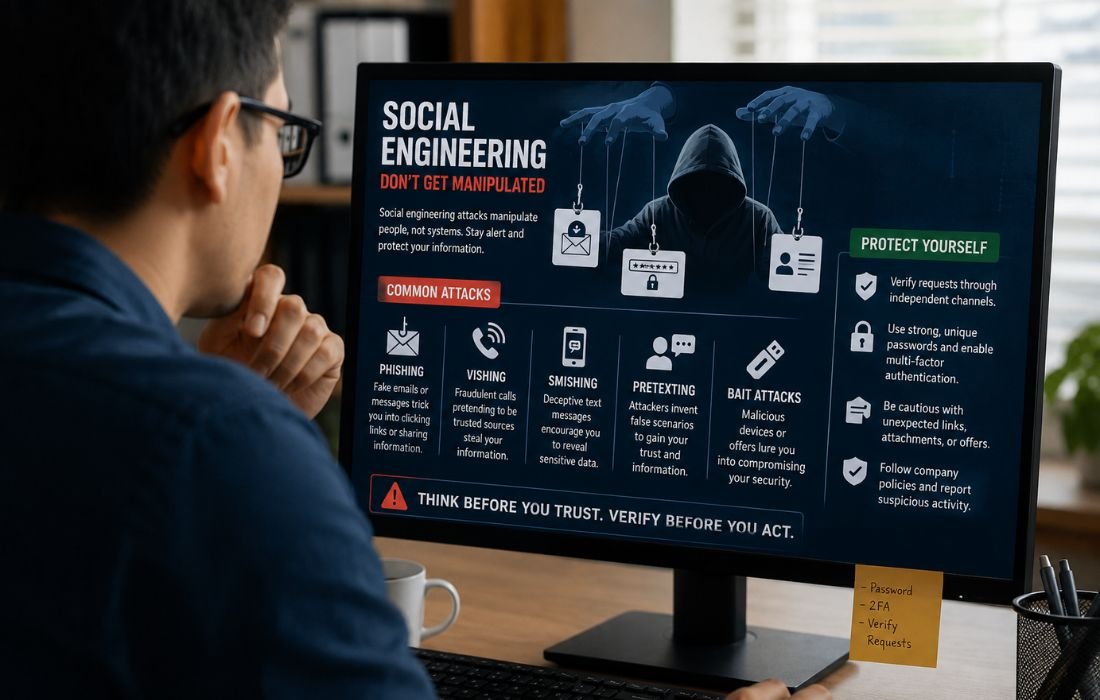
Cybercriminals can penetrate the security of corporations without needing sophisticated technology. They rely on some human traits like gullibility or urgency in order to get their target data. This method is known as social engineering and is one of the most effective means of cyber attacks because it uses human beings instead of flaws in application programs.
Social engineering scams have come a long way over the years, and from fake phone calls to phishing emails, they continue to take on new forms. Knowing how these scams function and how to spot the signs of these attacks will help consumers and businesses safeguard themselves against these criminal activities.
What Is Social Engineering?
Social engineering is a kind of cyber attack that involves the use of tricks and manipulations by the attackers to gain sensitive information, gain unauthorized access, and make people do different things that compromise the safety of information. Such attacks are based not on the presence of technical vulnerabilities, but rather on the use of psychological manipulation.
This is the case where a fraudster may pose as a firm’s IT support and convince an employee to provide them with login details or authorize the resetting of a password. The trick may seem real, but its purpose is to acquire confidential information and/or unlawful entry into the system.
Common Social Engineering Attack Techniques
Attackers use a variety of tactics depending on their target and objectives.
Phishing and Spear Phishing
Phishing is still a major type of social engineering attack. Victims receive fake emails or text messages that seem to have been sent by trusted companies. If you’re unsure how to defend yourself against these attacks, check out our guide on 5 Ways to Prepare for a Phishing Attack for practical prevention tips.
These messages prompt the victim to click on dangerous links, download malware, or enter their login credentials on a fake site.
Spear phishing is a more targeted version, where attackers research specific individuals or organizations before crafting personalized messages. Because these emails often reference real names, projects, or business relationships, they can be far more convincing than generic phishing attempts.
Vishing and Smishing
Social engineering is no longer limited to email.
Vishing (Voice Phishing): The scammers make contact with the target through a phone call pretending to belong to a bank or a government agency, such as technical support or similar services.
Smishing (SMS Phishing): Fraudulent text messages create a sense of urgency regarding something wrong with a bank account, a package delivery, or online purchases that ask people to visit harmful websites.
With such attacks, the victims usually enter a state of anxiety due to pressure and act quickly without confirming the authenticity of the request.
Physical Social Engineering
Some attacks occur in person rather than online.
Attackers may dress as contractors, delivery personnel, or maintenance workers to gain access to restricted areas. Others leave infected USB drives or charging devices in office parking lots, hoping curious employees will connect them to company computers.
These seemingly harmless actions can introduce malware or provide attackers with a foothold inside an organization’s network. If you’d like to understand how malware works and why it’s dangerous, read our article Breaking Down What Malware Is for Beginners.
AI-Powered Social Engineering
Artificial intelligence has made social engineering attacks more convincing than ever.
Cybercriminals now use AI to generate professional-looking phishing emails, clone voices, and create realistic deepfake audio or video messages that appear to come from trusted executives. These attacks make it increasingly difficult to distinguish legitimate communications from fraudulent ones, especially during urgent situations involving financial transactions or sensitive business requests.
Why Social Engineering Is So Effective
Unlike traditional cyberattacks that target software vulnerabilities, social engineering targets human behavior.
Attackers often exploit psychological triggers such as:
- Urgency
- Authority
- Trust
- Curiosity
- Fear
- Familiarity
For example, an employee who receives an email appearing to come from a senior executive requesting an immediate payment may act quickly without following normal verification procedures. Attackers understand these emotional responses and use them to bypass technical security controls.
Real-World Business Risks
Social engineering attacks can result in significant financial and operational damage. A successful attack can expose confidential information, disrupt business operations, and lead to costly data breaches. You can also explore our guide on Data Breaches and Cyber Risk: 7 Useful Tips to learn how organizations can better protect sensitive information.
Organizations have faced changes in payments to fake vendors, theft of data from top managers’ accounts, changes of passwords without permission, and cases of ransomware attacks because employees have given their login and passwords to criminals unknowingly.
Finance departments, help desks, other employees helping managers, and people working in reception and security and protecting managers are targeted specifically due to their access to confidential information and important business processes.
Best Practices to Prevent Social Engineering Attacks
Technology alone cannot remove risks related to social engineering; organizations must use employee awareness and security techniques like procedures and technology to prevent attacks.
Some of the most effective defenses include:
- Verify unexpected requests through a separate communication channel before taking action.
- Never share passwords, one-time verification codes, or multi-factor authentication (MFA) approvals with anyone.
- Confirm changes to vendor banking information using trusted contact details rather than email alone.
- Implement phishing-resistant MFA wherever possible.
- Train employees using realistic attack scenarios instead of annual compliance exercises.
- Restrict physical access through visitor verification, badge controls, and anti-tailgating policies.
- Encourage employees to report suspicious emails, calls, or messages immediately.
They must also check their internal processes on a regular basis in order to find the ones that are often used by attackers for exploitation.
Warning Signs of a Social Engineering Attack
Many attacks share common characteristics. Learning to identify suspicious emails is one of the best ways to avoid becoming a victim. Our guide on 8 Ways to Recognize Phishing Emails and Not Get Fooled explains the common warning signs in greater detail. Be cautious if you notice:
- Unexpected requests for confidential information.
- Messages creating extreme urgency or fear.
- Suspicious links or unfamiliar attachments.
- Requests to bypass normal approval procedures.
- Phone calls asking for verification codes or passwords.
- Communications from free email accounts claiming to represent businesses.
- Requests for remote desktop or screen-sharing access without prior verification.
If something feels unusual, verify the request independently before responding.
Final Thoughts
One of the most effective cyberattack methods is social engineering, which relies on targets that are human beings rather than machines. As phishing attacks, AI-initiated scams, and the art of impersonation are advancing, organizations and people should establish good security practices along with technological measures.
Frequent training in cybersecurity awareness, protocols for verification, authentication that can resist phishing attacks, and an active culture of questioning new calls for action can help lower the chances of fraud becoming successful. Being vigilant and verifying before believing are some of the best ways of combating the current threats appearing in the field of social engineering.