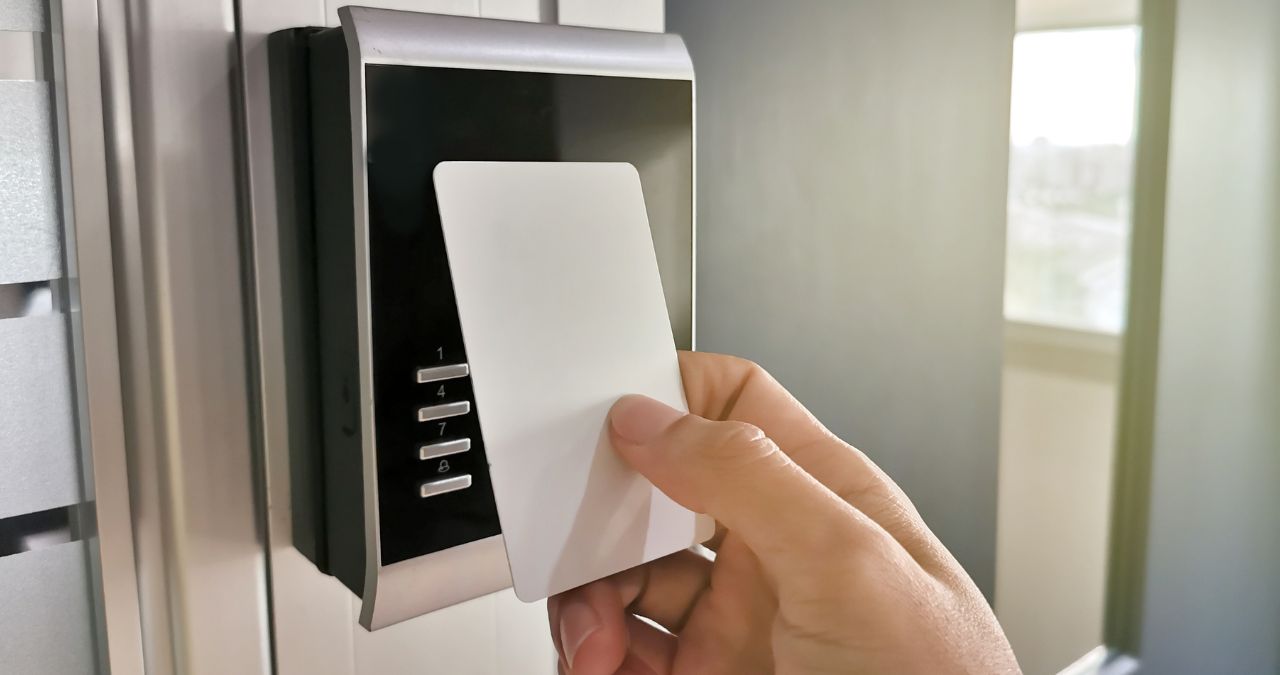
Hey readers, As businesses and homes become increasingly connected, securing premises has become more than just locking doors. Wireless access control offers an efficient, modern, and flexible solution. Unlike traditional locks, wireless systems combine connectivity, convenience, and security, making them ideal for offices, hospitals, residential complexes, and more.
What Is Wireless Access Control?
Wireless access control pertains to security systems that leverage wireless technology — frequently WiFi or some form of RF communications technology — to regulate access to a building or secured area. Wireless access control solutions permit authorized users to access the building or secured area without needing a physical key. Examples of wireless access control devices include smartphones, smart cards, and other similar digital credentials.
The technology that drives wireless access control is often based on WiFi (Wireless Fidelity), which utilizes the IEEE 802.11 standard for local area network (LAN). WiFi communications operate typically at a 2.4 GHz frequency, and also operate within the 900 MHz, 3.6 GHz, and 60 GHz bands in addition to the 2.4 GHz range. Wireless access control devices can provide direct checking of access to and access management of an area securely and in real-time, without the need for extensive wiring or changes to an existing infrastructure.
How Wireless Locks Work
Wireless locks make use of digital and network-related technologies to provide secure keyless entry. Users can open their doors using smartphone applications, Bluetooth devices, and/or cloud-related software. The wireless locks will communicate with a central management suite of software to grant access to authorized individuals in authorized areas.
The wireless lock indoor range varies from 66 ft to 230 ft, based on WiFi or RF signal strength. The outdoor distance is typically slightly longer since there are fewer obstructions in the outdoors. Wireless locks are compatible with multiple devices, including smartphones, PCs, tablets, other smart appliances, etc.
Advantages of Wireless Access Control
There are many advantages of using wireless access control instead of a traditional key-based or wired system:
- Lower cost: Wireless systems are often less expensive to install and maintain than legacy access control systems.
- Fast and easy installation: Some systems can be self-installed.
- Better security: Access control systems can offer better encryption and user authentication.
- Flexible: Can be easily scaled for a small or large facility.
- Convenient: Using a smartphone to access a building removes the need for keys.
- Peace of mind: Being able to monitor who comes and
Limitations of Wireless Access Control
While wireless locks are highly efficient, they may not be suitable for every situation:
- Offline Limitations: Some systems require network connectivity, which can be a challenge during power outages.
- Integration Issues: Not always part of a larger security ecosystem.
- Obsolescence: Technology upgrades may render older models outdated.
- Despite these limitations, wireless access control remains a compelling option for most modern security needs.
Applications of Wireless Access Control
Wireless access control is ideal for a variety of settings:
- Offices: Streamlines employee entry and enhances security.
- Hospitals: Allows controlled access to sensitive areas.
- Residential Complexes: Offers residents keyless, secure entry.
- Educational Institutions: Protects labs, classrooms, and staff areas.
- Retail Spaces: Manages restricted access for staff and inventory rooms.
Cloud-based solutions, like Spintly, simplify access management for organizations of any size. These platforms allow administrators to manage permissions, revoke access instantly, and track user activity from anywhere.
Key Features of Wireless Access Control
- Connectivity: Seamless
- Security: Encrypted
- Management: Cloud
- Access: Keyless
- Scalability: Flexible
- Integration: Compatible
- Monitoring: Real-time
- Support: Responsive
Why Businesses Choose Wireless Access Control
Wireless access control does not just provide convenience; it can offer strategic benefits to modern organizations:
- Efficiency: Saving time on traditional key management.
- Accountability: Providing accurate records of employee or visitor access.
- Control from a Distance: Allowing administrators to remotely manage access.
- Scalability: Allowing the system to grow with the organization.
- Insights: Allowing the organization to observe to improve security strategies and policies.
By leveraging security and convenience benefits, organizations can
Future Trends in Wireless Access Control
By 2025, wireless access control has developed along some key trends:
- Mobile Integration: A majority of wireless access control systems are now mobile app based for end user authentication and management.
- Artificial Intelligence & Analytics: Predictive security feature to identify suspicious activities.
- IOT Connectivity: Interconnectivity with other smart building systems.
- Cloud Management: Centralized dashboard to control many locations simply.
- Improved Encryption: Protects all data from threats.
All of these trends make the wireless access control system more intelligent, scalable, and user friendly than ever before!
Final Thoughts
Wireless access control is more than a technical upgrade and a very smart, modern way of protecting your home or your business; it provides flexibility, reliability, and reassurance for any level of property. From business or office applications to residential apartments or complexes, these systems are providing convenience and peace of mind for an ever-evolving, security-conscious world. WiFi and cloud technologies allow companies and organizations the opportunity to build an effective and robust approach to entry management without compromising security.
If you need a flexible and future-proof solution to security now and in the future, wireless access control is heading in the right direction. It is the new and the next progression to access, increase safety, and allow users and administrators alike to feel secure in managing vulnerable spaces while being both
Frequently Asked Questions (FAQs)
1. What does wireless access control mean?
Wireless access control is a security feature that will let users access locations without the need for a physical key, often using cell phones, smart cards, and other wireless devices.
2. How do wireless access control systems work?
Wireless access control systems communicate with a management platform, usually using either WiFi or RF signals, to allow, track and deny access to spaces in real time.
3. Are wireless locks secure?
Yes, most systems today use encrypted communication and user verification to ensure security.
4. Can wireless access control run without a network?
In some cases, a wireless access control system may not function as well during a network outage. If this is a concern, make sure you select a system that allows for offline access as an option.
5. Who uses wireless access control?
Businesses, hospitals, multi-family residential communities, schools, and retail spaces are ways to combine security, convenience, and management in a sole solution.
Also Read : Mesh Router, Repeater or Power Line: Which Is Best For Your Internet?